

A simple algorithm for generating realistic skin tones in code
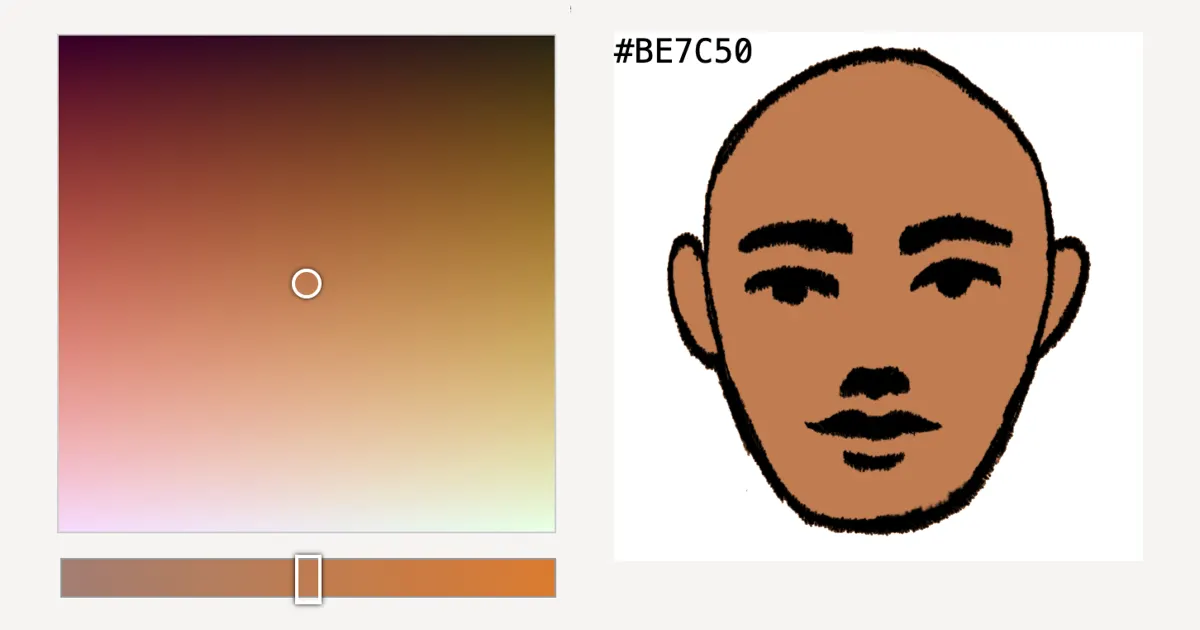
Emojis give you five skin tones; standard color pickers force you to pick from 16.7 million mostly terrible choices.
A developer built a custom color space and sampling algorithm designed to programmatically generate realistic human skin tones. Shared on Hacker News, the project uses a few lines of Python and JavaScript to map points from a sphere directly into valid RGB values, creating a smooth, inclusive spectrum between five presets and sixteen million colors.
Why it matters: If you build video games, character creators, or generative art, procedural diversity is surprisingly tricky. Traditional RGB pickers let users accidentally make neon-green avatars, while static swatches exclude millions of real people. This lightweight math gives developers a simple way to pull plausible, diverse skin tones out of a computer on demand.
Know this: The project doesn't claim to be a perfect biological model. Real skin involves complex light scattering, blood flow, and varying pigmentation across the body. Instead, the author pitched this as a "good enough" engineering shortcut for simple digital representations.
It turns out that making your game's character creator feel a lot more like the real world just takes a few lines of matrix math.
Sources
- Inclusive Color Space — https://toneyalexander.github.io/inclusive-color-space/
- Hacker News Discussion — https://news.ycombinator.com/item?id=49170165