

Why you can't trust USB-C cables (and how a $15 tool fixes it)
Your USB-C cables look identical, but half of them are secretly throttling your gear.
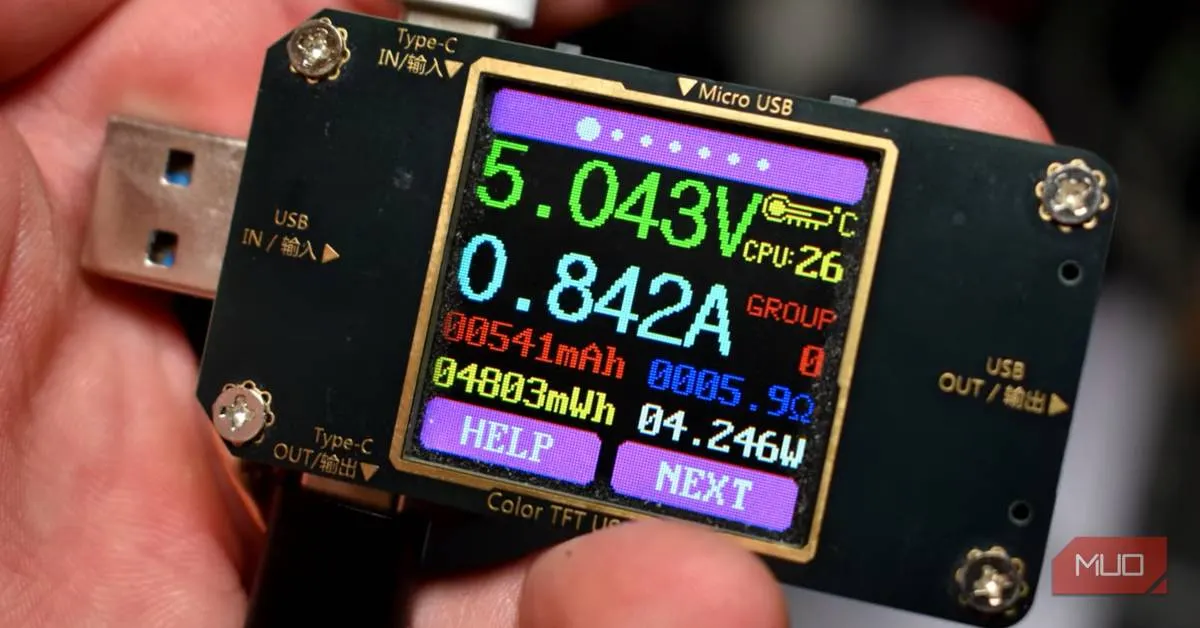
Tech writer Oliver got tired of guessing which cable could fast-charge his 16-inch MacBook Pro versus one built for cheap earbuds. He bought a $15 inline USB-C power tester to sort through his drawer. The small meter sits between a power adapter and device to show live voltage, current, and wattage. He then tagged every verified cord with a handheld label maker.
Why it matters: USB-C wires look identical on the outside, but internal e-marker chips decide what they actually do. Any cord charging above 60W or transferring data faster than 480Mbps requires one. Without a meter, picking the right cable from a drawer is pure guesswork.
Know this: Basic hardware testers like the $15 YEREADW KWS-2303C show live power delivery. Higher-end meters can read the cable's e-marker chip directly, revealing maximum power ratings and data speeds up to 40Gbps.
Until cable makers adopt standard color coding, a cheap meter and a label maker are your best defense.