

SpaceX hauls Starship out of the Indian Ocean after 24 days at sea
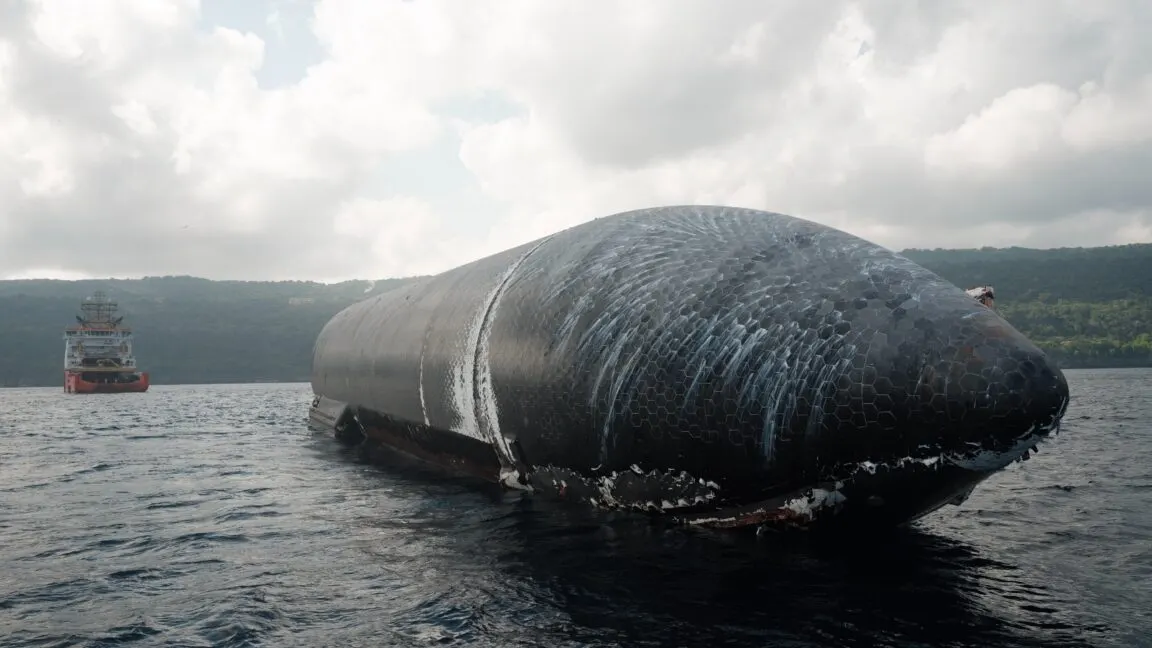
Against immense physical odds, SpaceX dragged a Starship spacecraft into port after it spent 24 days drifting in the Indian Ocean.
Recovery crews wrapped air-filled Yokohama fenders around the rocket to keep it afloat in rough seas before towing it to Christmas Island. SpaceX CEO Elon Musk previously said recovering the ship was "not looking good," but teams managed to take close-up photos of its heat shield and engines. The vehicle won't fly again—salt water corrosion and splashdown damage ruined the electronics and structure. Future missions will skip the ocean entirely, using mechanical arms on the launch tower to catch descending ships.
Why it matters: Engineers now get to inspect real, flight-tested heat shield tiles in a lab. Starship uses about 18,000 ceramic tiles to survive reentry. Musk declared the heat shield problem "solved" on an August 4 earnings call, but industry experts remain skeptical. Inspecting these recovered tiles will show if they can withstand rapid turnaround without constant repairs.
SpaceX needs these tiles to survive back-to-back flights with minimal inspections if it wants to run daily trips to the Moon, Mars, or orbital data centers.
It turns out three weeks of floating in salt water was worth the trouble for a few lab answers.