

Stanford swapped part of a mouse’s brain with human cells
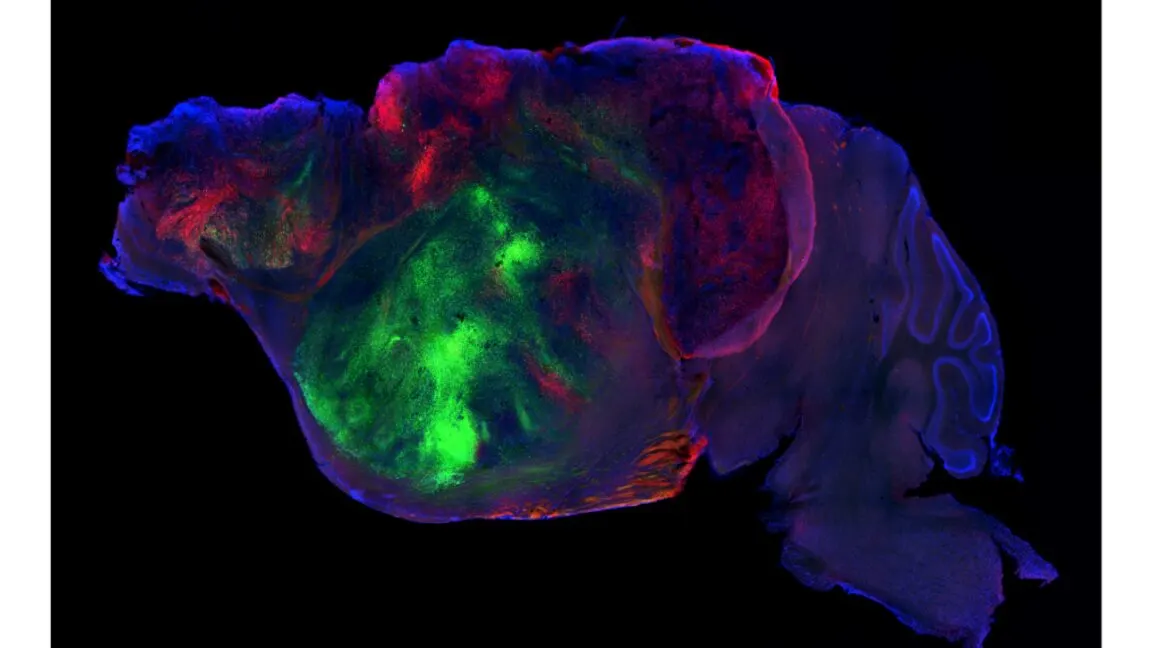
Stanford researchers just managed to replace a living mouse's cortex with functional human brain cells.
A team at Stanford genetically deleted the cells that form the mouse cortex, cutting total brain volume in half. They then implanted human brain organoids—clumps of tissue grown from stem cells—into the empty space. Over 85% of the mice successfully integrated the graft, with human cells taking over 92% of the cortex area and extending connections all the way to the spinal cord, Ars Technica reported.
Why it matters: Lab-grown brain organoids usually sit in petri dishes, isolated from a real nervous system. Placing them inside a living animal gives scientists a much better model to study how human brain cells communicate and how complex neurological diseases work.
Know this: The replacement isn't perfect. The human cells failed to build the distinct layers of a normal cortex, leaving the brain region disorganized. Automated video tracking showed these mice behaved differently than both normal mice and cortex-free mice—a slight improvement over having no cortex at all.
Full brain swaps are still a long way off, but lab-grown human brain tissue just got a lot more realistic.
Sources
- Stanford replaces mouse cortex with human organoid cells — https://arstechnica.com/science/2026/09/researchers-swap-in-human-brain-cells-for-a-mouses-cortex/