

How Databricks cut its AI coding spend by 70%
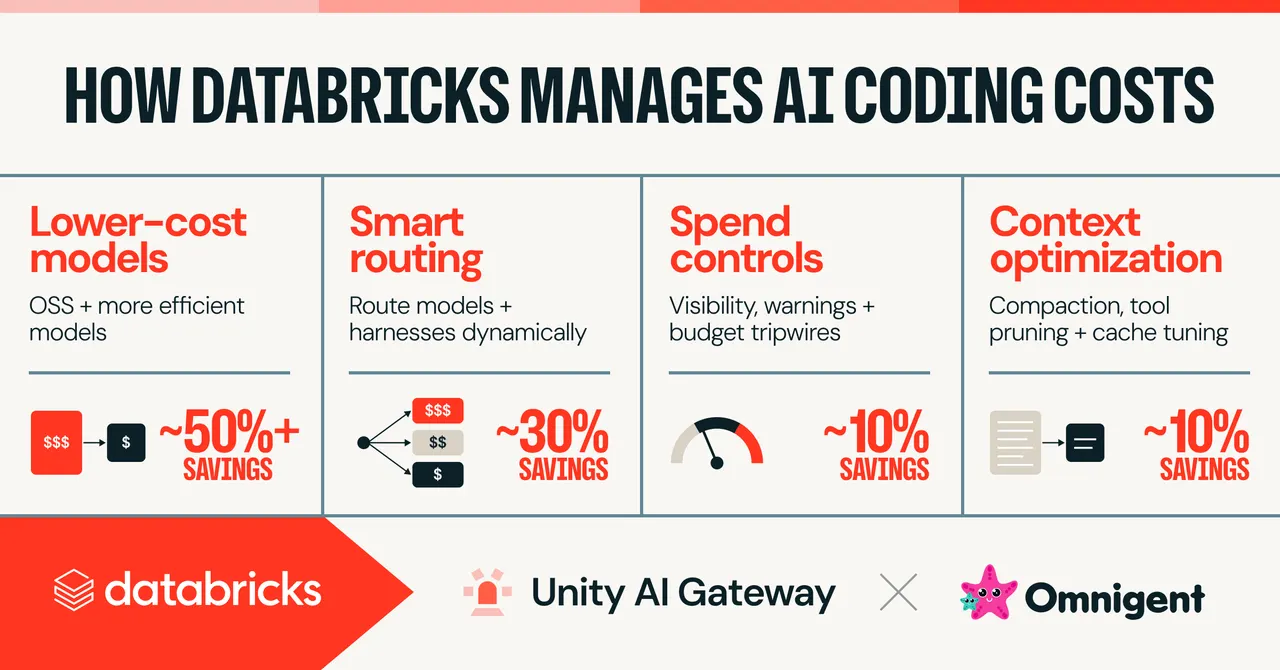
Giving every engineer an AI coding assistant gets expensive fast, but Databricks found a way to rein in the bill.
Databricks published a playbook detailing how it slashed internal AI software engineering spend by 70% while expanding developer access. The trick comes down to chasing the "efficiency frontier"—swapping pricey models for cheaper alternatives that still pass quality checks for routine tasks. Internal tests showed strong price-to-performance for GLM models, prompting a company rollout. On the flip side, Stripe skipped an upgrade to Opus 4.7 after evaluations showed higher costs with no quality jump over Opus 4.6.
Why it matters: AI tools raise engineering output, but unchecked API spend threatens to eat up the financial gains. Digital-native companies like Coinbase, Ramp, and Uber are converging on the same fix: decoupling developer interfaces from underlying providers so traffic routes to whatever model offers the best price for the job.
Try it / know this: Databricks released its internal tools to the public. You can use Omnigent (their developer meta-harness) and Unity AI Gateway to handle model switching and request routing behind the scenes.
The fastest way to cut your AI bill isn't waiting for cheaper flagship models—it's using lighter models when they get the job done.
Sources
- Managing AI Coding Costs at Scale — https://www.databricks.com/blog/managing-ai-coding-costs-scale
- Hacker News Discussion — https://news.ycombinator.com/item?id=49214468